
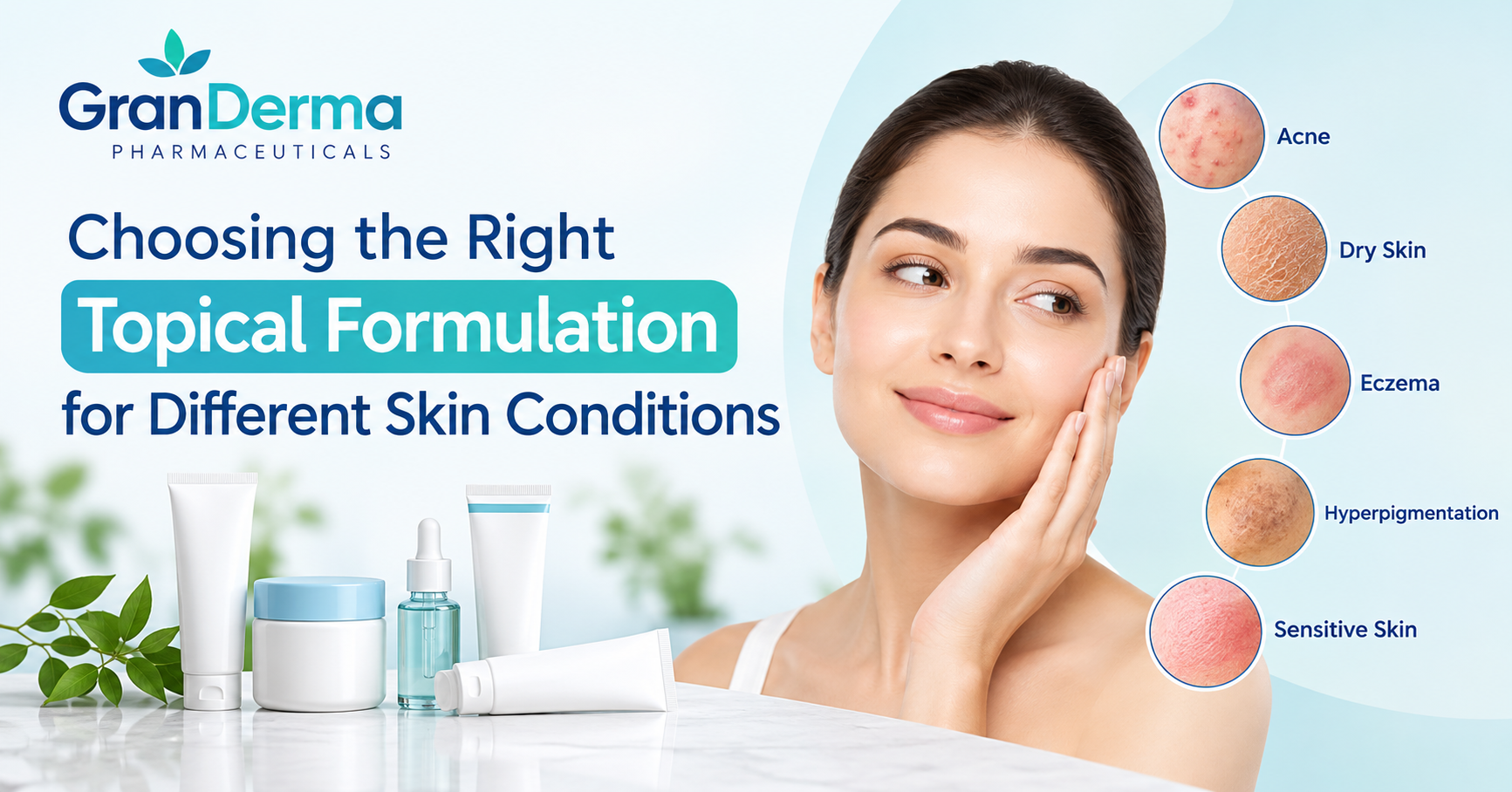
Choosing the Right Topical Formulation for Different Skin Conditions
A cream that works well for dry skin may feel greasy on someone with acne. A gel used to control breakouts may leave sensitive skin irritated. Even when two products contain the same active ingredient, they need not produce the same experience during application. The base, texture and other ingredients can make a considerable difference.
This is something worth examining when selecting dermatology products for distribution. The formulations involved in a derma PCD franchise in India can include several creams, gels, ointments, cleansers and lotions, among others. However, each of these formulations have their own uses and it becomes important to understand their uses before forming the portfolio of the company.
A person who decides to work with a derma PCD franchise company must not consider only the list of ingredients written on the pack. The formulation of the product, its usage and storage conditions should be considered. Such considerations become important in a derma PCD pharma franchise business, where different medicines meant for different purposes are distributed.
Several derma PCD firms provide products of the same category. Hence, understanding topical formulations becomes important for buyers.
Why Are Creams, Gels and Ointments Not Interchangeable?
Yet, the difference between cream and ointment is not limited to their texture. Each formulation which will transport the active ingredient and aid in delivering it to the skin.
The cream preparation usually consists of an oil and water combination. Cream preparations are easily applied and used in areas where the application of thick preparations might be uncomfortable for a patient. Different compositions of creams account for their varying level of moisture.
Gels are different. They usually consist of a water structure and form less grease when applied on the skin. They are often used to treat acne; however, some products have alcohol or other substances that could make the skin dry.
Ointments consist of more oily/occlusive components. They prevent water loss and are generally more suitable for certain dry or thickened skin problems.
Lotions are more fluid in nature and can be useful for covering large areas of the body.
Acne Treatment Requires More Than Oil Control
While oiliness of the skin seems to be a key feature of acne, increased sebum formation is just one of the factors that lead to the condition. Blockage of hair follicles, inflammation, and activity of Cutibacterium acnes also need to be considered.
There are several substances found in the topical treatment for acne:
- Benzoyl peroxide – Decreases bacteria that cause this disorder and works on inflammatory lesions.
- Salicylic acid – Causes sloughing of the dead skin cells and helps to unclog pores.
- Adapalene – Retinoid which is applied topically for inflammatory acne.
- Azelaic acid – Utilized in the treatment of acne and some pigmentations.
- Niacinamide – Often found in skincare products for barrier integrity and redness management.
Even if a substance is included in a treatment for acne does not mean that each of these products can be used the same way. The concentration of active substances, additional ingredients, and frequency of application need to be taken into account. For instance, while choosing the acne segment for the derma PCD pharma franchise, the distributor needs to be able to distinguish prescription treatments from skincare products.
Treating Pigmentation Starts With Finding The Cause
Dark spots on the skin can develop for different reasons. Some appear after acne has healed while others become more noticeable after prolonged sun exposure. Since the causes vary, treatment may vary from person to person. Skin sensitivity also matters. Some products can cause redness, dryness or irritation, particularly when several active ingredients are used together. A dermatologist can help identify the cause of pigmentation and recommend suitable treatment.
How Moisturisers Help Dry Skin?
Their proportions vary depending on whether the product is intended for the face, hands or particularly dry areas of the body. A moisturizer does not only have to make your skin smooth for a few hours but should help it retain moisture and minimize the dryness which causes roughness, peeling and other skin discomfort. Humectants, emollients, occlusives, and many more are some of the components used in moisturizers.
The amounts of each may differ according to the area of the body the cream is meant for.
Sunscreen has an important role here. Without proper photoprotection, pigmentation might continue or come back despite the treatment of choice. A potential risk is the unsupervised application of steroid-based creams that have the capability to lighten the skin. These creams have side effects and cannot be considered just a cosmetic preparation.
In case of assessing pigmentation products from derma PCD companies, the buyer needs to look into the strength of ingredients and other issues rather than fast skin lightening.
Sensitive Skin Can React to Otherwise Familiar Ingredients
When dealing with sensitive skin, simplicity may work better. In case of suspected contact allergy, dermatologists usually suggest patch tests. It is the same for cleansing products. Powerful cleansing is not always effective cleansing. Excessive stripping of surface oils from the skin leaves the skin dry and uncomfortable. A company interested in a derma PCD franchise in India should understand the difference between cleansing products and skin condition-specific products.
What Makes a Topical Product Stable During Storage?
A product needs to remain suitable for use throughout its labelled shelf life, provided it is stored as directed. During product assessment, distributors should check:
- Manufacturing and expiry dates
- Batch identification
- Storage instructions
- Packaging seals and container condition
- Applicable manufacturing and quality documentation
- Procedures for dealing with damaged or recalled products
These are practical considerations for any derma PCD franchise company supplying products through pharmaceutical distribution networks.
Why a Large Product Catalogue Is Not Enough?
A list that includes various types of creams, gels, and lotions may seem very extensive. However, this, on its own, does not prove that the formulas used have been designed and manufactured correctly. It will be helpful to review the manufacturing process, licensing information, quality records and composition information when evaluating derma PCD companies.
Furthermore, the distributor must know which products need prescription and which products belong to another type of regulation. In a derma PCD pharma franchise, maintaining correct storage conditions and reliable batch records is especially important because the products eventually reach patients through healthcare supply channels.
A carefully selected portfolio covering relevant skin concerns can be more practical than carrying several closely similar products without a clear understanding of their differences.
Choosing Products With a Clear Purpose
Dermatology products have to be evaluated in the context of what they are expected to perform. The key ingredient is an important aspect, but there is also the question of its strength, the base used, where it will be applied, and the condition of the skin.
It becomes essential knowledge for anyone who is thinking about getting a derma PCD franchise in India. Instead of evaluating a catalogue based on the number of formulations available, one should pay more attention to their composition, proper documentation, and appropriate use.
This type of information is also useful for distributors who can deliver product information without making any medical claims on the part of the physician.
Frequently Asked Questions
Q1. Which products are commonly available through a derma PCD franchise in India?
A. Common products include medicated creams, gels, ointments, lotions, cleansers and other dermatological preparations.
Q2. What should be checked before selecting a derma PCD franchise company?
A. Review product composition details, applicable licences, manufacturing standards and storage requirements.
Q3. Why is product formulation important in a derma PCD pharma franchise?
A3.The formulation influences how an ingredient is delivered, how the product feels on the skin and its stability.
Q4. How can distributors compare products offered by derma PCD companies?
A4. They can compare dosage forms, ingredient strengths, regulatory documentation, packaging and quality-control standards.
Q5. Are creams and gels equally suitable for every skin type?
A5. No, their suitability depends on the ingredients, the skin condition and the intended treatment.

Leave a comment